
Computer Worlds
24 September 2026 – 14 February 2027
West Bund Museum | Gallery 3
The first systematic presentation in China of an international history of digital creation spanning more than 75 years
From generative art to artificial intelligence, a survey of landmark works from the digital age
From post-war laboratories to contemporary China, local resonances of the computational era
Computer Worlds
24 September 2026 – 14 February 2027 | Gallery 3
The Centre Pompidou × West Bund Museum Project will present its annual special exhibition, Computer Worlds, from 24 September 2026 to 14 February 2027. Drawing on the collection of the Centre Pompidou, the exhibition brings together nearly 180 works and archival documents—including digital and graphic works, installations, architectural models and design objects—to conduct an “archaeology” of digital creation from the 1950s to the present. From the birth of generative art to non-fungible tokens (NFTs), and from data processing to 3D-printed objects, the exhibition invites visitors to move between physical, imagined and virtual worlds, tracing the continuing history between art and the computer while exploring the many relationships among people, machines and creation.
An interdisciplinary group exhibition spanning new media, design and architecture, Computer Worlds looks back at pioneering works by the founders of computer art while also presenting some of today’s most forward-looking practices. Major works from the collection by Herbert Franke, Manfred Mohr, Vera Molnar and members of the Vincennes Art and Computer Science Group enter into dialogue with recent acquisitions by Cory Arcangel, Kourosh Asgar-Irani, Agnieszka Kurant, Neri Oxman, Mika Tajima and Lu Yang. Rare archival materials also shed light on the creative processes of major artists and designers, including Vera Molnar and Ettore Sottsass.
A Digital Creation Revolution Spanning 75 Years
Since the Second World War, computing technology—initially advanced through major developments in the military sphere—has rapidly become a symbol of technological optimism. From the laboratories of the 1950s to blockchain in recent years, the rise of computer-generated virtual worlds has been rooted in the post-war decades’ visions of the future, fundamentally transforming how people today relate to the world and to images.
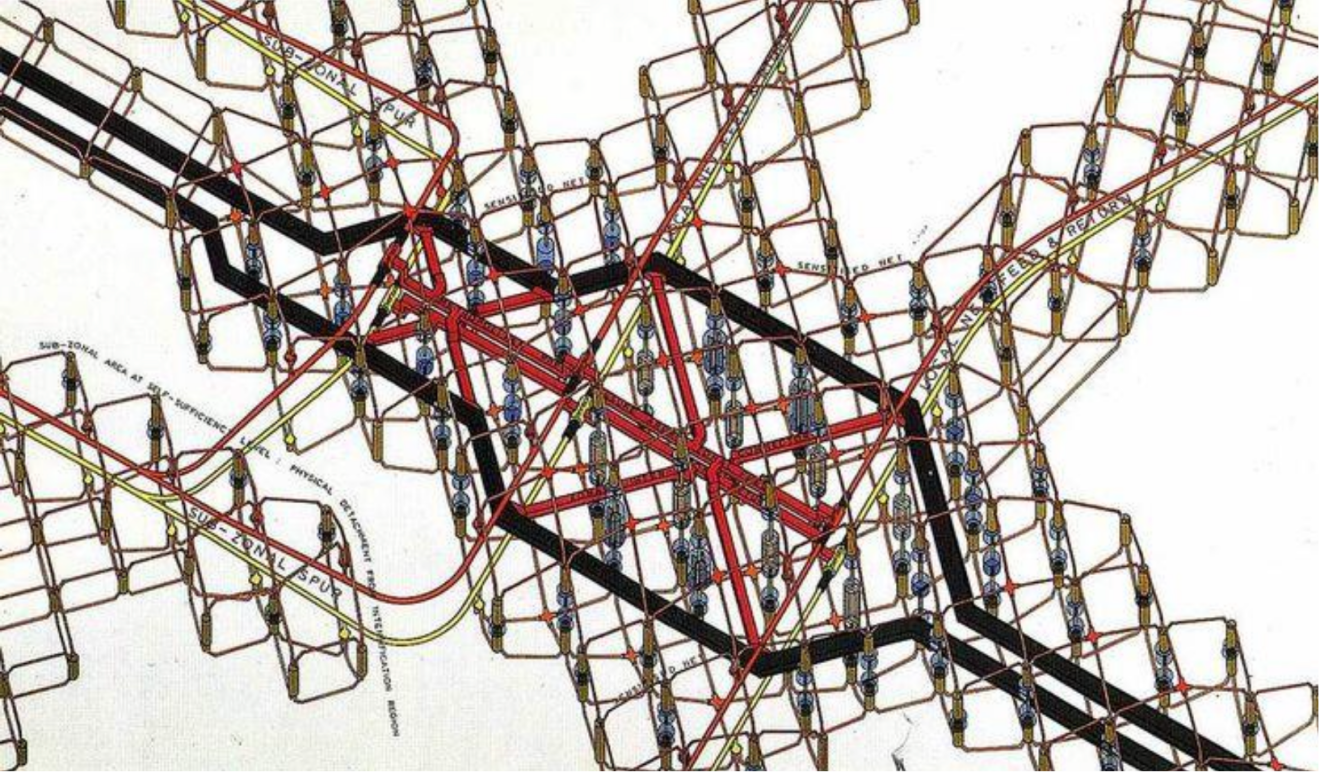
Inspired by cybernetics and information science, architects, designers, artists and engineers used new tools to imagine the future. Designers contributed to the development of large-scale mainframe systems, laying the groundwork for breakthroughs in computing power; architects envisioned intelligent, interconnected cities, as in Archigram’s Computer City (1964); and artists experimented with digital media to represent the complexity of the real world and generate endlessly varied abstract forms. Computer Worlds offers a comprehensive look back at this revolution in digital creation across art, design and architecture.
Seven Sections in an International History of Digital Creation
Spanning media and disciplines, the exhibition unfolds across seven sections. “Computational Forms” explores images generated through code and algorithms. “Pixel Aesthetics” reduces images to their smallest units and asks how we see. “Digital Craft”—which includes Chinese artist Wan Yang—reveals a hidden lineage linking punch-card looms with 3D printing. “Code, Image and Digital Writing” considers how machines record, reproduce and even “write” signs. “Digital Ecosystems” approaches nature as a form of software. “Flows and Networks,” featuring Chinese artists Lin Ke and Lu Yang, examines new ecologies including internet art and NFTs. The exhibition concludes with “Intelligent Data?”, moving from Turing to generative AI and returning to a persistent question: if machines can think, can they also feel and create? And where, exactly, does the “intelligence” in what we call “artificial intelligence” reside?
Digital Creation in the Chinese Context
As one of the special exhibitions presented by the Centre Pompidou × West Bund Museum Project, Computer Worlds continues the institutions’ commitment to building dialogue between Eastern and Western art through a cross-cultural perspective, while taking on new meaning in a local context. The exhibition gives particular prominence to works by Chinese artists. In “Digital Craft,” Wan Yang expands the boundaries of abstract art through the interplay of computer technology, painting and digital imagery. In “Flows and Networks,” projects by Lin Ke and Lu Yang question how knowledge, social relations and identity are being reshaped in the internet age. Their inclusion gives this international history of digital creation a tangible and immediate resonance in contemporary China.
Since beginning a new five-year phase of collaboration with the Centre Pompidou, West Bund Museum has continued to address underrepresented subjects in local accounts of modern and contemporary art history. By combining leading international content and sustained research into the history of digital art with a substantial Chinese perspective and locally grounded artistic practices, Computer Worlds enables the project to generate genuine cultural meaning and value in its local setting.